

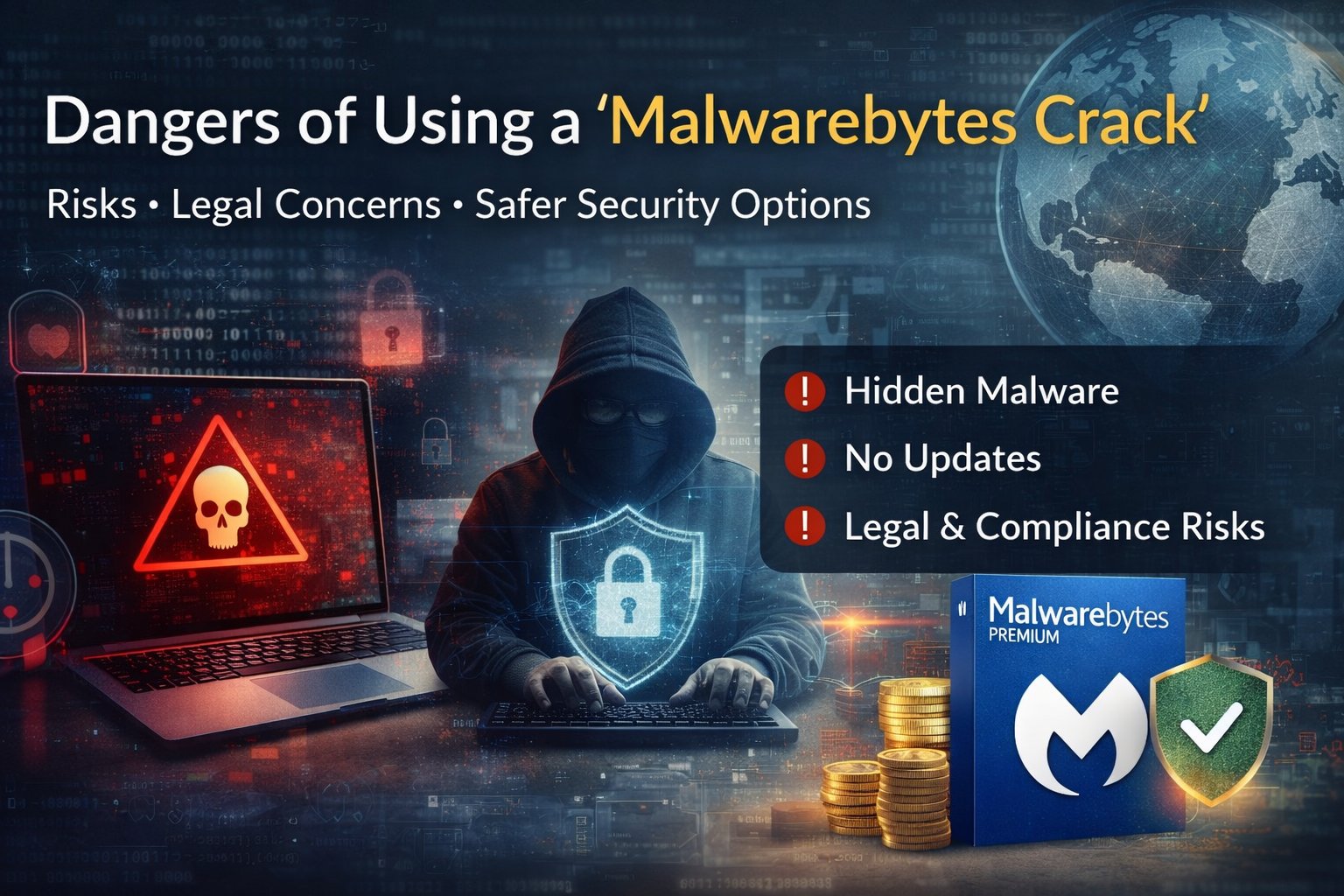
Every week, thousands of users search for terms like “Malwarebytes crack” or “best crack for Malwarebytes.” The motivation is understandable—enterprise security software can feel expensive, especially for startups or growing organizations.
But here’s the critical question:
Would you trust your company’s cybersecurity to software that criminals distribute for free?
For IT managers, founders, and security decision-makers, the answer has serious implications. This article explains why cracked security software is dangerous, what actually happens behind the scenes, and what legitimate, safer alternatives exist—without compromising protection or compliance.
What People Mean by “Malwarebytes Crack”
When users search for a Malwarebytes crack, they’re usually looking for:
-
A pirated version of Malwarebytes Premium
-
A modified license key generator
-
A bypass of subscription or activation checks
These versions are not authorized, not supported, and not trustworthy—especially ironic for a product designed to stop malware.
Why Cracked Cybersecurity Software Is Extremely Dangerous
1. Cracked Security Tools Often Contain Malware
From a cybersecurity standpoint, cracked software is one of the most common infection vectors.
Attackers frequently bundle:
-
Remote access trojans (RATs)
-
Keyloggers
-
Ransomware loaders
-
Backdoors for persistent access
In other words, the very software meant to protect your system becomes the attack surface.
2. No Updates = No Protection
Malwarebytes (and similar tools) rely on:
-
Real-time threat intelligence
-
Signature updates
-
Behavior-based detection improvements
Cracked versions typically:
-
Disable update servers
-
Block cloud communication
-
Run outdated detection engines
This leaves systems exposed to modern threats, including zero-day malware.
3. Legal, Compliance, and Business Risks
For organizations, the risks go far beyond malware:
-
License violations (audit failures)
-
Regulatory non-compliance (ISO 27001, SOC 2, GDPR)
-
Reputational damage if breaches occur
-
No vendor support during incidents
For CEOs and IT leaders, these are business-level risks, not just technical ones.
Why “Free” Cracks Cost More in the Long Run
| Short-Term Gain | Long-Term Cost |
|---|---|
| No subscription fee | Incident response expenses |
| Instant access | Data breaches |
| No approval needed | Compliance failures |
| Bypassed licensing | Legal exposure |
Security professionals consistently agree:
The cheapest security choice often becomes the most expensive mistake.
Legitimate Alternatives to Using a Malwarebytes Crack
1. Use Official Free or Trial Versions
Malwarebytes offers:
-
A free version with manual scanning
-
Trial access to premium features
This allows evaluation without legal or security risk.
2. Consider Cost-Effective Security Alternatives
Depending on your environment, alternatives may include:
-
Endpoint protection platforms (EPP)
-
Managed detection and response (MDR)
-
Cloud-based security services
-
Open-source tools (with proper expertise)
The key is risk-based selection, not feature shopping.
3. Centralized Security Is Better Than Pirated Tools
Many organizations move away from standalone endpoint tools entirely, choosing:
-
Unified dashboards
-
Automated remediation
-
Policy-based controls
-
Professional monitoring
This reduces both operational overhead and attack surface.
How Security Leaders Should Evaluate Malware Protection
If you’re an IT manager or founder, ask these questions:
-
Does this solution update automatically?
-
Is it legally licensed and auditable?
-
Can I get vendor or expert support?
-
Does it scale with my organization?
-
What happens during a breach?
Cracked software fails every one of these tests.
Real-World Perspective: Attackers Love Pirated Software
From a threat actor’s view, users searching for “best crack for Malwarebytes” are:
-
Willing to disable security controls
-
Likely to run unknown executables
-
Less cautious about permissions
That makes cracked software communities a prime hunting ground for cybercriminals.
Frequently Asked Questions (FAQ)
1. Is using a Malwarebytes crack illegal?
Yes. Using cracked or pirated software violates licensing agreements and may expose individuals and organizations to legal consequences.
2. Can cracked Malwarebytes still protect my system?
No. Cracked versions often disable updates and may include hidden malware, making them unsafe and ineffective.
3. Why do people still search for Malwarebytes cracks?
Cost concerns, lack of awareness, and underestimating cybersecurity risks are common reasons.
4. Are free antivirus tools safer than cracked premium ones?
Yes. Legitimate free tools are significantly safer than pirated versions of paid software.
5. What’s the safest way to secure business systems?
Use licensed software, centralized security management, and professional guidance tailored to your risk profile.
Conclusion: Security Shortcuts Create Long-Term Damage
Searching for a Malwarebytes crack might seem like a shortcut—but in cybersecurity, shortcuts are exactly what attackers exploit.
For organizations operating globally, trust, compliance, and resilience matter more than saving a license fee. Real security comes from legitimate tools, informed decisions, and expert oversight.
If you want help choosing secure, cost-effective protection—or understanding safer alternatives tailored to your industry—
👉 Talk to cybersecurity experts today:
🔗 https://scanoncomputer.com/contact/